

Summary
On the App Install Ads team, I helped create a new ad creation surface tailored to small and medium advertisers. Working closely with engineering, I designed Smart App Promotions to simplify and streamline app install campaigns for less experienced advertisers. I validated early prototypes with target advertisers and incorporated their performance requirements into the product. Smart App Promotions delivered strong ease of use and performance, allowing it to graduate quickly from beta to full launch and paving the way for additional automation‑driven ad products at Facebook.
Problem Statement

first time to create app install add
to stabilize performance
Creatives uploaded and tested for successful ads
Although Facebook had a best‑in‑class ads engine, many “tail and torso” developers struggled to get started. First‑time advertisers often spent up to 90 minutes creating their first app install campaign, longer than a flight from Los Angeles to San Francisco. Because Ads Manager used a single, complex interface for all advertisers, new users had to wade through a mix of mandatory and optional settings, which made the experience overwhelming.
Once campaigns were live, maintaining them posed additional challenges. Cost per install could take up to two weeks to stabilize, complicating planning and forecasting. Any change, including increasing the budget, frequently reset the learning period and made scaling difficult. On top of that, understanding which creatives performed best was rarely straightforward, pushing advertisers to constantly test a high volume of ad variations.
My contribution
I worked closely with quantitative and qualitative researchers to identify which parts of the ad creation flow were most problematic for both new and existing app install advertisers. Based on several rounds of research and client visits, I designed a new surface Smart App Promotions that directly reflected new advertisers’ feedback. To drive adoption and alignment, I ran design roadshows with multiple ads teams and brought their automation products into the experience, creating a streamlined and focused entry point that makes it easy for new advertisers to run campaigns and test creatives.
App install ads team

Design lead

2 Researchers

Content strategist

2 Product managers

Eng manager

13 Engineers

2 Product marketing managers
Outcome & Impact

15% to 25% reduction in Cost Per Action campaigns
20% - 30% cheaper conversions with other metrics comperable
Additional ad product teams joined SAP foundation
Smart App Promotions outperformed comparable human‑managed campaigns and rapidly graduated from beta and MVP status to become one of Meta’s first automated ad campaign formats. They maintained similar engagement levels while significantly lowering both cost per install and cost per action, making them an obvious win for tail‑and‑torso advertisers. The strong results prompted other ads teams to follow suit and develop their own automated campaign solutions.
Advertisers experience
I partnered with our researcher on foundational work to understand how app install advertisers actually promote their apps. Once we mapped their mental models for creating and managing campaigns, I redesigned the ad creation flow to match those expectations. I pulled critical information out of hidden tooltips, making it easy to discover, and collaborated with a content strategist to ensure all copy was practical and actionable. I also combined all creatives into one section that tested different text, image, and video combinations, then automatically directed more budget to the best‑performing variations.
Value
I partnered with engineers to identify which parts of the ad campaign flow were irrelevant for app installs and which controls could hurt performance, then removed those unnecessary steps from Smart App Promotions.
Simplicity
Additionally, I restructured the flow to align with advertisers’ expectations. As the project gained momentum, I used the opportunity to introduce other automated ad products, creating a more holistic and streamlined experience.
Visual design
I took the opportunity to redesign the ad experience using consumer-facing colors, components, and patterns to reinforce that Smart App Promotions was a new, streamlined experience for first-time advertisers.
Previous Facebook ads creation
Previously, the app install advertiser experience used a high-friction, generic ad creation flow built on an established but long-outdated system. Advertisers had to do a significant amount of work outside of the core ad creation process, and the interface included dozens of additional controls and levers that could easily disrupt or derail a campaign if used without deep expertise. Advertisers also viewed this experience as a black box and frequently expressed frustration that they couldn’t see where their money was going or what results they were getting.
Roadshows & customer visits
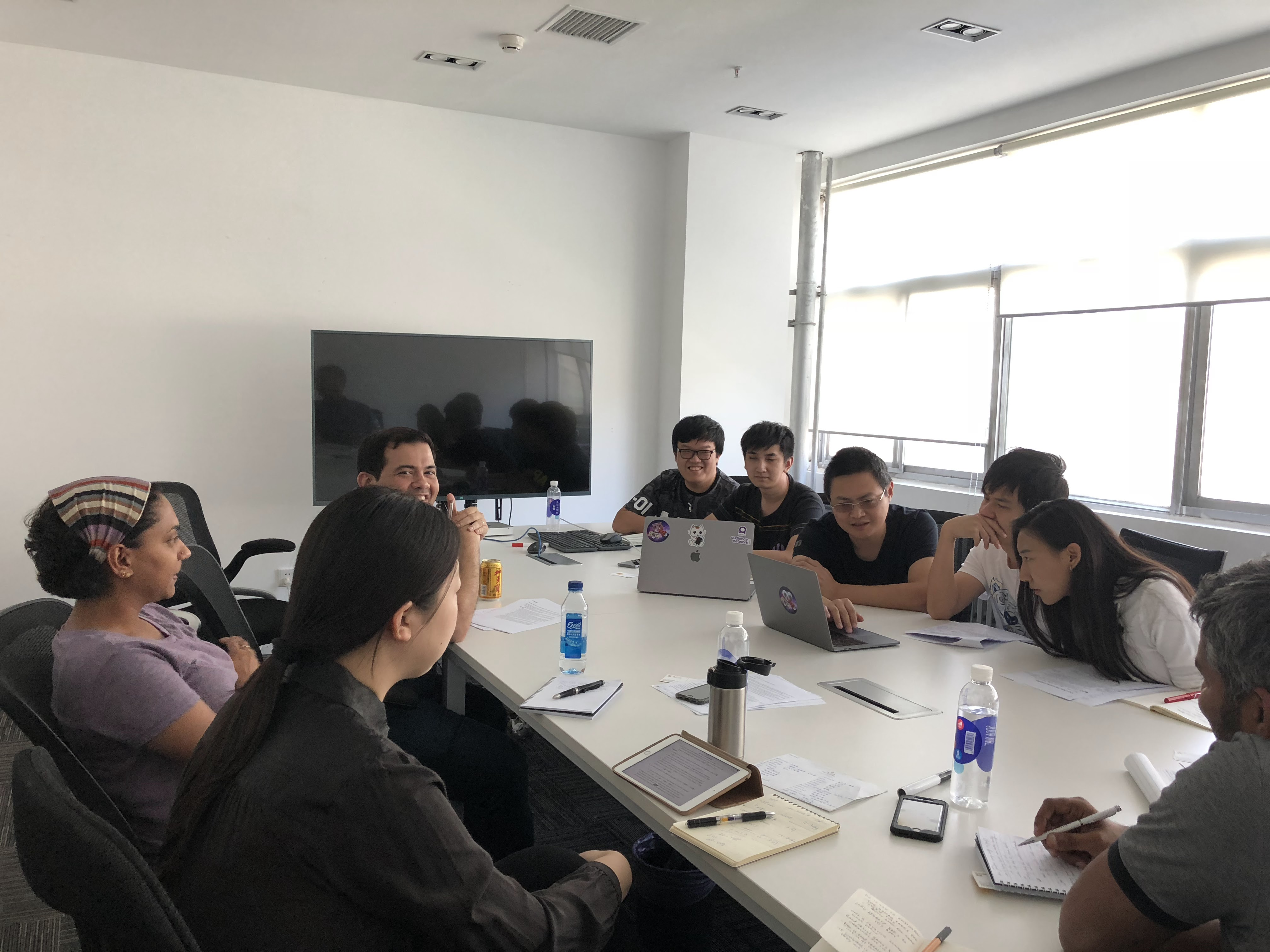
Through customer visits and user research, I gained a deep understanding of app install advertisers’ flows, needs, and requirements. We discovered that smaller advertisers were not inherently unsophisticated; instead, they typically had smaller budgets and found it difficult to scale on Facebook. This insight motivated our team to simplify the flows while keeping performance as a core priority. During our roadshows, several adjacent ad teams showed interest in our work and offered their automation products for integration, which helped us build a powerful, automated, and easy-to-use ad creation platform.
Outcomes
Impact
Smart App Promotions outperformed comparable human‑managed campaigns and rapidly graduated from beta and MVP status to become one of Meta’s first automated ad campaign formats. They maintained similar engagement levels while significantly lowering both cost per install and cost per action, making them an obvious win for tail‑and‑torso advertisers. The strong results prompted other ads teams to follow suit and develop their own automated campaign solutions.
Team collabs
Cheaper conversions
Cheaper CPI
User research & personal learnings
Through customer visits and interviews, I realized that app install advertisers were in fact highly sophisticated. Chinese advertisers, for instance, employed dozens of people to run hundreds of ads each day, dynamically reallocating budgets to the best-performing creatives. This behavior inspired us to automate ad creative optimization using machine learning and testing.
We also identified technical barriers to scaling spend: simply adding budget did not reliably produce proportional results and often led to higher costs with fewer outcomes. As a result, a key track of the Smart App Promotion initiative focused on removing these technical obstacles so advertising could scale more effectively, particularly for tail and torso advertisers.
Currently viewing
Playable Ads
META
B2C
B2B
Ads
Lead
Mobile
2017
Skype
MICROSOFT
B2C
B2B
Mobile
Experimental
2015
Fire Phone
Amazon
B2C
Mobile
0-1
Experimental
2014
INRIX
INRIX
B2B
B2C
Mobile
0-1
2013
Sales Coaching
Lead
AI
0-1
Sales CRM
2025
Sales Assistant
Lead
AI
0-1
Sales CRM
2024
Customer Authentication
Lead
B2B
B2C
Security
2023
Workforce Automation
Lead
B2B
Big Data
2022
Collaborative Stories
META
Lead
B2C
Mobile
2020
Summary
On the App Install Ads team, I helped create a new ad creation surface tailored to small and medium advertisers. Working closely with engineering, I designed Smart App Promotions to simplify and streamline app install campaigns for less experienced advertisers. I validated early prototypes with target advertisers and incorporated their performance requirements into the product. Smart App Promotions delivered strong ease of use and performance, allowing it to graduate quickly from beta to full launch and paving the way for additional automation‑driven ad products at Facebook.
Problem Statement
first time to create app install add
to stabilize performance
Creatives uploaded and tested for successful ads
Although Facebook had a best‑in‑class ads engine, many “tail and torso” developers struggled to get started. First‑time advertisers often spent up to 90 minutes creating their first app install campaign, longer than a flight from Los Angeles to San Francisco. Because Ads Manager used a single, complex interface for all advertisers, new users had to wade through a mix of mandatory and optional settings, which made the experience overwhelming.
Once campaigns were live, maintaining them posed additional challenges. Cost per install could take up to two weeks to stabilize, complicating planning and forecasting. Any change, including increasing the budget, frequently reset the learning period and made scaling difficult. On top of that, understanding which creatives performed best was rarely straightforward, pushing advertisers to constantly test a high volume of ad variations.
My contribution
I worked closely with quantitative and qualitative researchers to identify which parts of the ad creation flow were most problematic for both new and existing app install advertisers. Based on several rounds of research and client visits, I designed a new surface Smart App Promotions that directly reflected new advertisers’ feedback. To drive adoption and alignment, I ran design roadshows with multiple ads teams and brought their automation products into the experience, creating a streamlined and focused entry point that makes it easy for new advertisers to run campaigns and test creatives.
App install ads team
Design lead
2 Researchers
Content strategist
2 Product managers

Eng manager

13 Engineers

2 Product marketing managers
Outcome & Impact
15% to 25% reduction in Cost Per Action campaigns
20% - 30% cheaper conversions with other metrics comperable
Additional ad product teams joined SAP foundation
Smart App Promotions outperformed comparable human‑managed campaigns and rapidly graduated from beta and MVP status to become one of Meta’s first automated ad campaign formats. They maintained similar engagement levels while significantly lowering both cost per install and cost per action, making them an obvious win for tail‑and‑torso advertisers. The strong results prompted other ads teams to follow suit and develop their own automated campaign solutions.
Advertisers experience
I partnered with our researcher on foundational work to understand how app install advertisers actually promote their apps. Once we mapped their mental models for creating and managing campaigns, I redesigned the ad creation flow to match those expectations. I pulled critical information out of hidden tooltips, making it easy to discover, and collaborated with a content strategist to ensure all copy was practical and actionable. I also combined all creatives into one section that tested different text, image, and video combinations, then automatically directed more budget to the best‑performing variations.
Value
I partnered with engineers to identify which parts of the ad campaign flow were irrelevant for app installs and which controls could hurt performance, then removed those unnecessary steps from Smart App Promotions.
Simplicity
Additionally, I restructured the flow to align with advertisers’ expectations. As the project gained momentum, I used the opportunity to introduce other automated ad products, creating a more holistic and streamlined experience.
Visual design
I took the opportunity to redesign the ad experience using consumer-facing colors, components, and patterns to reinforce that Smart App Promotions was a new, streamlined experience for first-time advertisers.
Previous Facebook ads creation
Previously, the app install advertiser experience used a high-friction, generic ad creation flow built on an established but long-outdated system. Advertisers had to do a significant amount of work outside of the core ad creation process, and the interface included dozens of additional controls and levers that could easily disrupt or derail a campaign if used without deep expertise. Advertisers also viewed this experience as a black box and frequently expressed frustration that they couldn’t see where their money was going or what results they were getting.
Roadshows & customer visits
Through customer visits and user research, I gained a deep understanding of app install advertisers’ flows, needs, and requirements. We discovered that smaller advertisers were not inherently unsophisticated; instead, they typically had smaller budgets and found it difficult to scale on Facebook. This insight motivated our team to simplify the flows while keeping performance as a core priority. During our roadshows, several adjacent ad teams showed interest in our work and offered their automation products for integration, which helped us build a powerful, automated, and easy-to-use ad creation platform.
Outcomes
Impact
Smart App Promotions outperformed comparable human‑managed campaigns and rapidly graduated from beta and MVP status to become one of Meta’s first automated ad campaign formats. They maintained similar engagement levels while significantly lowering both cost per install and cost per action, making them an obvious win for tail‑and‑torso advertisers. The strong results prompted other ads teams to follow suit and develop their own automated campaign solutions.
Team collabs
Cheaper conversions
Cheaper CPI
User research & personal learnings
Through customer visits and interviews, I realized that app install advertisers were in fact highly sophisticated. Chinese advertisers, for instance, employed dozens of people to run hundreds of ads each day, dynamically reallocating budgets to the best-performing creatives. This behavior inspired us to automate ad creative optimization using machine learning and testing.
We also identified technical barriers to scaling spend: simply adding budget did not reliably produce proportional results and often led to higher costs with fewer outcomes. As a result, a key track of the Smart App Promotion initiative focused on removing these technical obstacles so advertising could scale more effectively, particularly for tail and torso advertisers.
Currently viewing
Playable Ads
META
B2C
B2B
Ads
Lead
Mobile
2017
Skype
MICROSOFT
B2C
B2B
Mobile
Experimental
2015
Fire Phone
Amazon
B2C
Mobile
0-1
Experimental
2014
INRIX
INRIX
B2B
B2C
Mobile
0-1
2013
Sales Coaching
Lead
AI
0-1
Sales CRM
2025
Sales Assistant
Lead
AI
0-1
Sales CRM
2024
Customer Authentication
Lead
B2B
B2C
Security
2023
Workforce Automation
Lead
B2B
Big Data
2022
Collaborative Stories
META
Lead
B2C
Mobile
2020
Summary
On the App Install Ads team, I helped create a new ad creation surface tailored to small and medium advertisers. Working closely with engineering, I designed Smart App Promotions to simplify and streamline app install campaigns for less experienced advertisers. I validated early prototypes with target advertisers and incorporated their performance requirements into the product. Smart App Promotions delivered strong ease of use and performance, allowing it to graduate quickly from beta to full launch and paving the way for additional automation‑driven ad products at Facebook.
Problem Statement
first time to create app install add
to stabilize performance
Creatives uploaded and tested for successful ads
Although Facebook had a best‑in‑class ads engine, many “tail and torso” developers struggled to get started. First‑time advertisers often spent up to 90 minutes creating their first app install campaign, longer than a flight from Los Angeles to San Francisco. Because Ads Manager used a single, complex interface for all advertisers, new users had to wade through a mix of mandatory and optional settings, which made the experience overwhelming.
Once campaigns were live, maintaining them posed additional challenges. Cost per install could take up to two weeks to stabilize, complicating planning and forecasting. Any change, including increasing the budget, frequently reset the learning period and made scaling difficult. On top of that, understanding which creatives performed best was rarely straightforward, pushing advertisers to constantly test a high volume of ad variations.
My contribution
I worked closely with quantitative and qualitative researchers to identify which parts of the ad creation flow were most problematic for both new and existing app install advertisers. Based on several rounds of research and client visits, I designed a new surface Smart App Promotions that directly reflected new advertisers’ feedback. To drive adoption and alignment, I ran design roadshows with multiple ads teams and brought their automation products into the experience, creating a streamlined and focused entry point that makes it easy for new advertisers to run campaigns and test creatives.
App install ads team
Design lead
2 Researchers
Content strategist
2 Product managers
Eng manager
13 Engineers
2 Product marketing managers
Outcome & Impact
15% to 25% reduction in Cost Per Action campaigns
20% - 30% cheaper conversions with other metrics comperable
Additional ad product teams joined SAP foundation
Smart App Promotions outperformed comparable human‑managed campaigns and rapidly graduated from beta and MVP status to become one of Meta’s first automated ad campaign formats. They maintained similar engagement levels while significantly lowering both cost per install and cost per action, making them an obvious win for tail‑and‑torso advertisers. The strong results prompted other ads teams to follow suit and develop their own automated campaign solutions.
Advertisers experience
I partnered with our researcher on foundational work to understand how app install advertisers actually promote their apps. Once we mapped their mental models for creating and managing campaigns, I redesigned the ad creation flow to match those expectations. I pulled critical information out of hidden tooltips, making it easy to discover, and collaborated with a content strategist to ensure all copy was practical and actionable. I also combined all creatives into one section that tested different text, image, and video combinations, then automatically directed more budget to the best‑performing variations.
Value
I partnered with engineers to identify which parts of the ad campaign flow were irrelevant for app installs and which controls could hurt performance, then removed those unnecessary steps from Smart App Promotions.
Simplicity
Additionally, I restructured the flow to align with advertisers’ expectations. As the project gained momentum, I used the opportunity to introduce other automated ad products, creating a more holistic and streamlined experience.
Visual design
I took the opportunity to redesign the ad experience using consumer-facing colors, components, and patterns to reinforce that Smart App Promotions was a new, streamlined experience for first-time advertisers.
Previous Facebook ads creation
Previously, the app install advertiser experience used a high-friction, generic ad creation flow built on an established but long-outdated system. Advertisers had to do a significant amount of work outside of the core ad creation process, and the interface included dozens of additional controls and levers that could easily disrupt or derail a campaign if used without deep expertise. Advertisers also viewed this experience as a black box and frequently expressed frustration that they couldn’t see where their money was going or what results they were getting.
Roadshows & customer visits
Through customer visits and user research, I gained a deep understanding of app install advertisers’ flows, needs, and requirements. We discovered that smaller advertisers were not inherently unsophisticated; instead, they typically had smaller budgets and found it difficult to scale on Facebook. This insight motivated our team to simplify the flows while keeping performance as a core priority. During our roadshows, several adjacent ad teams showed interest in our work and offered their automation products for integration, which helped us build a powerful, automated, and easy-to-use ad creation platform.
Outcomes
Impact
Smart App Promotions outperformed comparable human‑managed campaigns and rapidly graduated from beta and MVP status to become one of Meta’s first automated ad campaign formats. They maintained similar engagement levels while significantly lowering both cost per install and cost per action, making them an obvious win for tail‑and‑torso advertisers. The strong results prompted other ads teams to follow suit and develop their own automated campaign solutions.
Team collabs
Cheaper conversions
Cheaper CPI
User research & personal learnings
Through customer visits and interviews, I realized that app install advertisers were in fact highly sophisticated. Chinese advertisers, for instance, employed dozens of people to run hundreds of ads each day, dynamically reallocating budgets to the best-performing creatives. This behavior inspired us to automate ad creative optimization using machine learning and testing.
We also identified technical barriers to scaling spend: simply adding budget did not reliably produce proportional results and often led to higher costs with fewer outcomes. As a result, a key track of the Smart App Promotion initiative focused on removing these technical obstacles so advertising could scale more effectively, particularly for tail and torso advertisers.
Currently viewing
Playable Ads
META
B2C
B2B
Ads
Lead
Mobile
2017
Skype
MICROSOFT
B2C
B2B
Mobile
Experimental
2015
Fire Phone
Amazon
B2C
Mobile
0-1
Experimental
2014
INRIX
INRIX
B2B
B2C
Mobile
0-1
2013
Sales Coaching
Lead
AI
0-1
Sales CRM
2025
Sales Assistant
Lead
AI
0-1
Sales CRM
2024
Customer Authentication
Lead
B2B
B2C
Security
2023
Workforce Automation
Lead
B2B
Big Data
2022
Collaborative Stories
META
Lead
B2C
Mobile
2020